“When you want to know how things really work, study them when they’re coming apart.” – William Gibson (2010), Zero History.
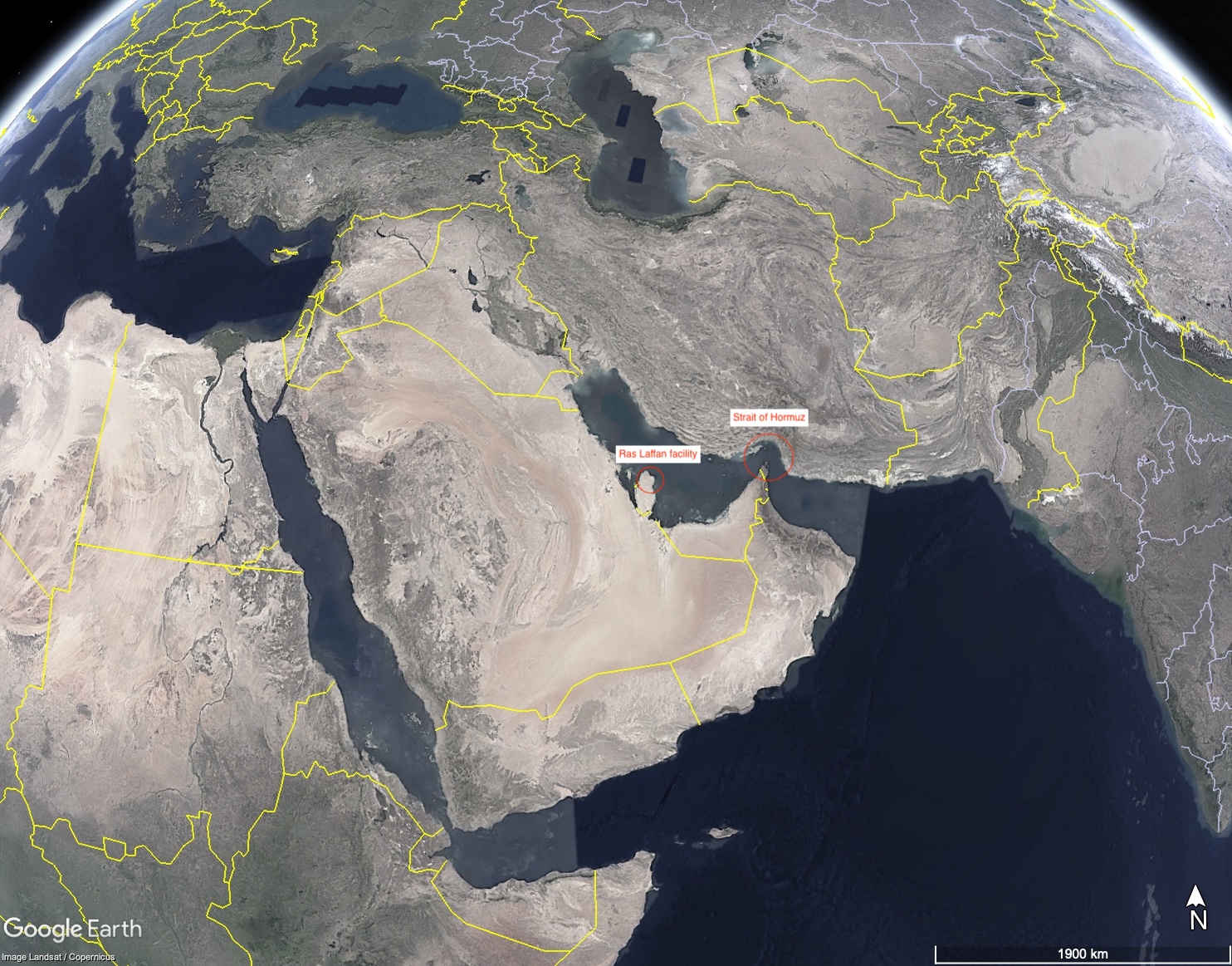
On 28 February 2026 the United States and Israel chose to launch military action against Iran. Since then, many tech sector commentators have rediscovered that geography matters. Abstractions like “the cloud” and “supply networks” were suddenly back on Earth, where they had always been.
The ‘end of geography’ has been part of the Silicon Valley tech mythos and marketing for decades. The sector has been portrayed as different from other industry from its earliest days in Santa Clara County. ‘Clean’, ‘green’, and ‘light’ industry was an illusion accomplished through tactics as diverse as zoning bylaws and advertising. Chip foundries in Silicon Valley were required to keep their chemical storage tanks underground so that they couldn’t be seen. On the surface, a campus landscape some call “pastoral capitalism” (Mozingo 2011; Burrington 2016). Beneath the surface, a seeping toxic stew (Lepawsky 2023). With the closure of the Strait of Hormuz, old-timey ‘capes-and-bays’ geography has come roaring back to where it has always been – in the middle of things.
When Israel and the United States chose to attack Iran, geometries of power (Massey 1994) that lay dormant for most people working in the tech sector erupted into view as key links and nodes in supply networks frayed, flickered, or broke. Every day that the Strait of Hormuz remains closed makes it more obvious how dependent planetary spanning supply networks rely on one or a few nodes in and around the region. Fossil fuels for energy are obvious. Increasingly, so is food – both in an immediate sense as distribution networks that rely on plastics are confronted with acute shortages, but also as supplies of fossil fuel derived fertilizers dwindle just as planting seasons begin. In a matter of weeks and months, concerns about how to supply materials on which the basic building blocks of the tech sector depend have spilled beyond the purview of supply chain specialists. On March 2, 2026 roughly 1/3 of the worlds supply of helium went off-line when a single facility in Qatar was hit by an Iranian drone strike (Jacobs 2026).
Helium is one of the thousands of chemicals and gases needed to make semiconductors. It also happens to be one for which there are no apparent substitutes on the horizon. According to the Semiconductor Industry Association (SIA), “the supply of helium for semiconductor manufacturing must be uninterrupted and available on-demand” (Semiconductor Industry Association 2023, 2). At the time SIA’s report was published they were worried about Russia (the invasion of Ukraine was just a year old) even as the industry noted that, “Qatar currently produces the majority of the world’s helium” (Semiconductor Industry Association 2023, 2).
Semiconductors are the foundation on which the rest of the tech sector is built. Without semiconductors, there’s no hardware. Without hardware, there’s no software. Without all that, there’s no tech sector. The tech sector is finding out that it was never detached from earthly geographies.
The loss of the Ras Laffan facility in Qatar is a good illustration of how a more sophisticated understanding of geography matters for analysis of things like the ‘global economy’ and the tech sector’s place in it. Conceptually, one can distinguish between patterns on the Earth’s surface–space–and the qualities of those patterns–spatiality. It’s not just that the Strait of Hormuz is located within a particular range of latitude and longitude. It’s also how the strait relates to all the other people, places, and things with which it is connected. Thinking about geography this way is more about topological networks than physical location on its own.
Many years ago, geographer Doreen Massey (1994) suggested we think of places, with all of their individual specificity, not as bounded sites but as crystallizations that arise from intersections of crisscrossing geometries of power. In a topological approach, the Ras Laffan facility becomes a node in a network of relations that connect many ‘elsewheres’. Being able to disable or destroy that facility, which is located at a specific latitude and longitude, is also to wield power from some specific place to many others. When a single node is as central to overall network functioning, as the Ras Laffan facility was, then control over that node grants whoever wields that control degrees of power over large portions over the overall network. Understanding this relative positioning of the Ras Laffan facility within its network of relations tells us something about the spatiality the supply network on which the tech sector is premised. That network is comprised of many nodes and connections between them, but some nodes and connections matter more than others. Ras Laffan is one of those nodes and its destruction demonstrates how fragile the power made possible by such networks can be. One node, 1/3 of global helium supplies. Done.
The toponym “Ras Laffan” appeared on British colonial maps of the region going back to the late 19th Century, but the industrial facility in question was completed in 1996. Ras Laffan took several years to build. We can see that in the images that follow. The facility is a good indicator of the dramatic changes and rearrangements underway as a consequence of the US and Israeli war of choice on Iran.
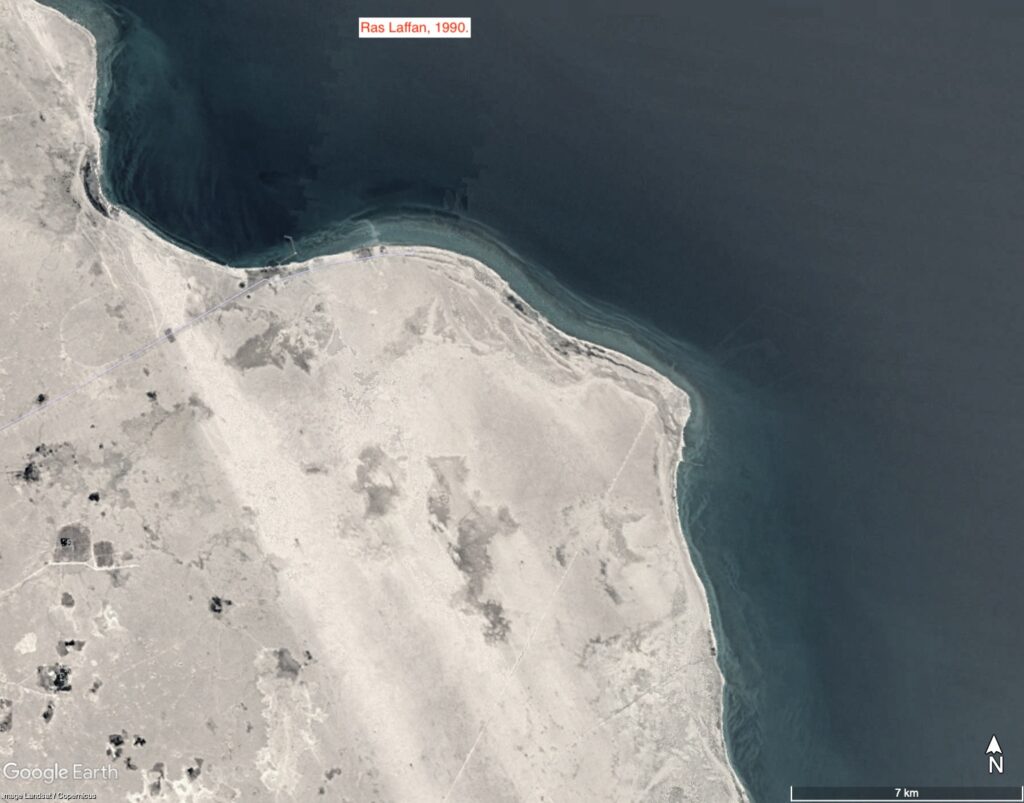
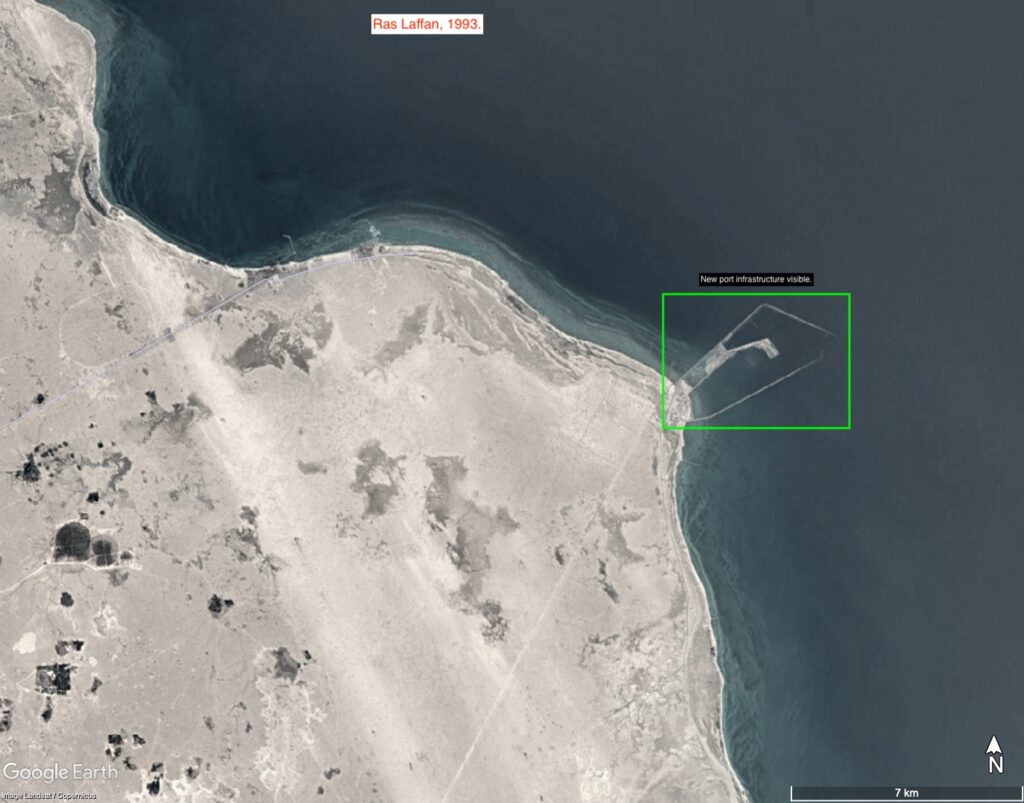
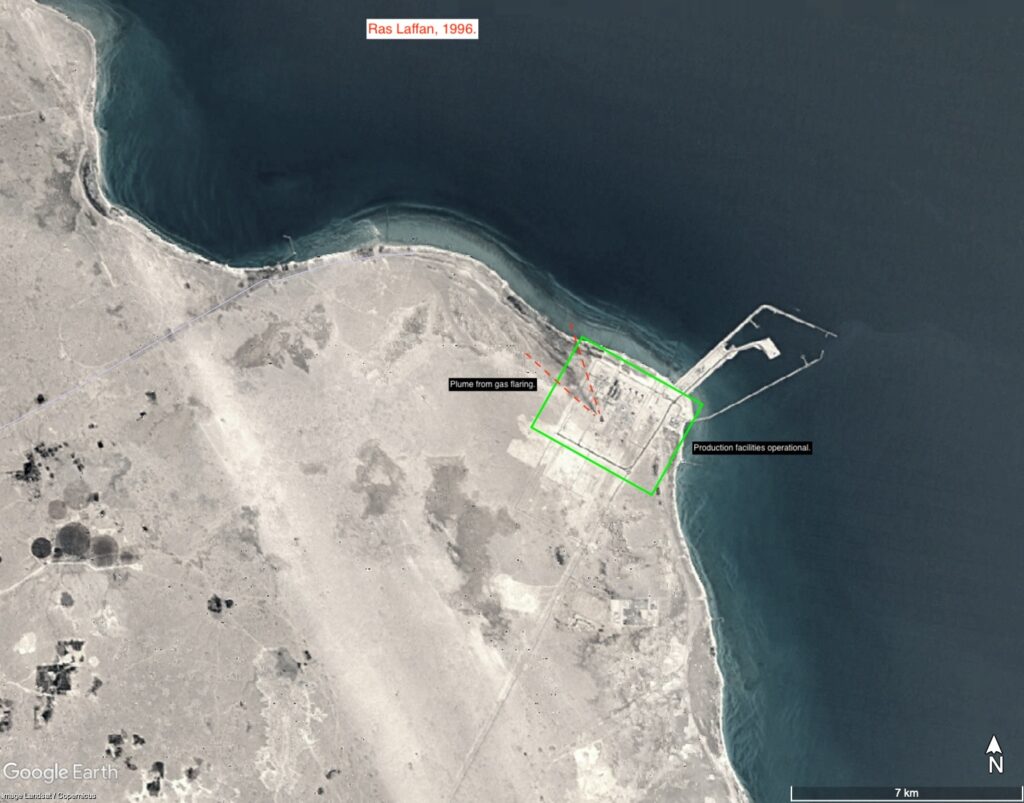
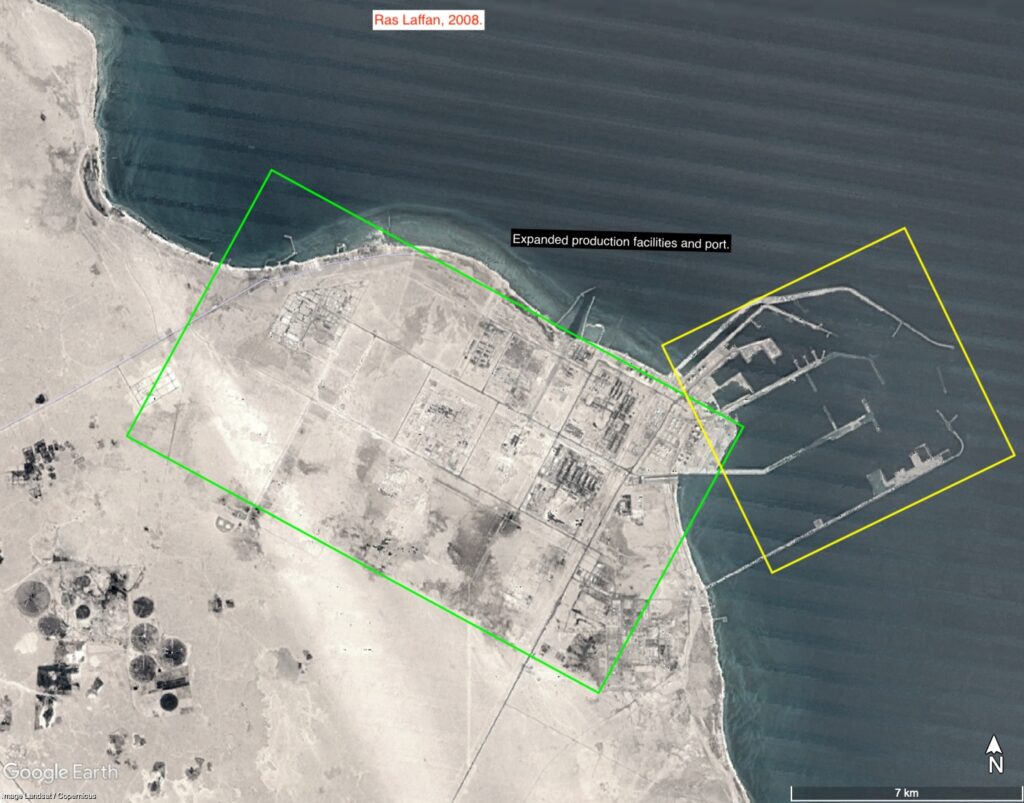
It will not be easy to find alternative sources of helium now that Ras Laffan is off-line. This single facility took billions of dollars and several years to build. With just this one node of the supply networks for helium there is an incredible number of interlinking logistics chains that extract helium from what are, at base, fossil carbon.
Writing today on April 16, 2026 from St. John’s, Newfoundland and Labrador, it feels eerily like January 2020. Back then, here, something we now sum up as ‘Covid’ was obviously on the horizon, like a tidal wave you could see approaching, but who’s depths and currents you couldn’t possibly fathom from the shore. Something like that is on the horizon now. It’s starting to sweep across some parts of the world with severe consequences. As usual, it’s the people, places, and things that are most marginalized by the status quo arrangements that are experiencing the consequences first and worst. To invoke Gibson again, the future is already here–it’s just not evenly distributed yet.
Quite significant disruptions to the status quo have already been set in motion by the closure of the Strait of Hormuz. The consequences for the tech sector becomes clearer by following the wake of actants, like helium, whose motion becomes more apparent as their former trajectories are sent off kilter by the re-arrangements of the nodes and links that make up their broader networks. To move helium from where it is produced, you need special containers that keep it insulated and pressurized in liquid form–something that requires helium being kept at -268°C (Ratner et al. 2026). That means a cold chain and a cold chain requires an uninterrupted sequence of refrigerated production, storage, and distribution–and all of those require uninterrupted energy supplies. Helium is an essential input into manufacturing semiconductors and to other other applications (e.g., medical imaging). Networks within networks of spaces; places emerging from their links to the many elesewheres on which they depend.
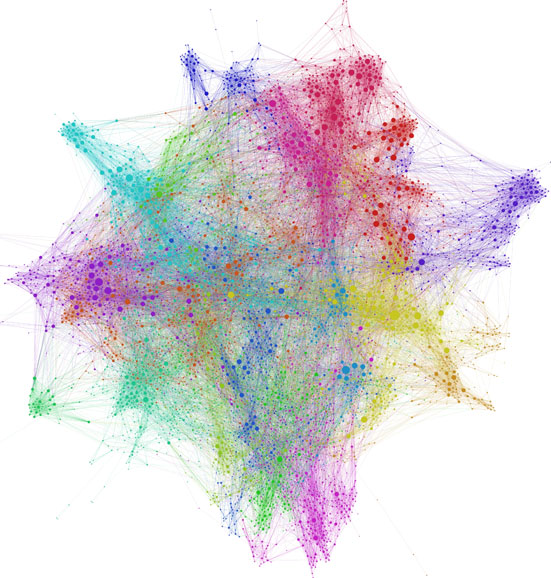
The geographies of the global economy and the tech sector might appear to be a planet spanning colossus. The Colossus at Rhodes was built to celebrate the defence of the city after a year long siege. The statue honoured the Greek sun god Helios after whom ‘helium’ gets its name. After some 54 years, an earthquake shook the Colossus of Rhodes to the ground. Paying attention to the earthly geographies of which the tech sector is inescapably part also shows just how fragile such an apparent colossus can be, no matter how mighty it may appear otherwise.
Works Cited
Burrington, Ingrid. 2016. Light Industry: Toxic Waste and Pastoral Capitalism – Journal #74 June 2016 – e-Flux. June. https://www.e-flux.com/journal/74/59781/light-industry-toxic-waste-and-pastoral-capitalism/.
Gibson, William. 2010. Zero History. G.P. Putnam’s Sons.
Jacobs, Skye. 2026. “Drone Strikes Halt a Third of the World’s Helium Supply, Threatening Chip Production.” TechSpot, March 14. https://www.techspot.com/news/111683-critical-semiconductor-gas-lost-third-global-supply-drone.html.
Lepawsky, Josh. 2023. “Mitigating Durable Bads: Trichloroethylene Contamination in Silicon Valley.” In Durable Economies: Organizing the Material Foundations of Society, edited by Melanie Jaeger-Erben, Harald Wieser, Max Marwede, and Florian Hofmann. Labor and Organization, volume 10. Transcript. https://doi.org/10.14361/9783839463963.
Massey, Doreen. 1994. Space, Place, and Gender. University of Minnesota Press.
Mozingo, Louise A. 2011. Pastoral Capitalism: A History of Suburban Corporate Landscapes. Urban and Industrial Environments. The MIT Press.
Ratner, Michael, Phillip Brown, Liana W. Rosen, and Clayton Thomas. 2026. Iran Conflict and the Strait of Hormuz: Impacts on Oil, Gas, and Other Commodities. United States Congressional Research Service.
Semiconductor Industry Association. 2023. Comments of the Semiconductor Industry Association (SIA) To the U.S. Geological Survey (USGS), Department of the Interior (DOI) On the Request for Comment on Helium Supply Risk.